Sunday, April 19, 2026

Been busy getting things settled in Clarinda

 58º here in Clarinda, IA at 7:45 pm Sunday; was 35º this morning.   Have been busy, even while seemingly not getting a lot done!

Friday morning it was 72 degrees here in Clarinda at 8 am when we left for Omaha/Elkhorn/Valley, NE.  Drive directly to near Vally where I had seen that a Tulip Festival was in process.  When there, about 10:15 pm it was 57º with a strong north wind and a "feel like" of 47º.
Was not a good day, weatherwise, to visit and a little pricey, but we were in the area for a doctor's appointment in nearby Elkhorn later in the day, so spent several hours there along with quite a few other people--many who were not dressed well for the weather.


I only had on a long-sleeved t-shirt, long sleeved shirt, knitted parka with hood, windbreaker with hood, leather insulated gloves (was wearing pants, too!) so got along.  Many were in shorts with t-shirts but they seemed much more agreeable with the weather than I was.


Was a petting farm animals area.


Today we rode with Patty Steckelberg to Creston for their square dance.  Not a very big crowd and most were in physical condition only for visiting.  Got up only one square and I ended up dancing all but one tip.  Hard on an old man that hasn't danced only a couple times in the last several years, but enjoyed the afternoon.  Phyllis was only able to dance one tip.

We drove by the house we lived in what was then called Millard from 1965 to 1967.  Of course the entire area has changed, is now part of Omaha and with all new street names and zillions of new homes.

.
Have cleaned up fallen trees/limbs in the railroad right-of-way behind our house.


Have mowed the lawn twice since we got here, sprayed 2,4D on dandelions and other broadleaf things.

Here is map of the Tulip Festival area


We will be driving to Cape Girardeau to help sister-in-law Vicki with moving some furniture from the apartment she and Don occupied for several years and just her the last year to a smaller unit that is near where Don has been.  Will take some of the furniture to our granddaughter Emily who will move it into the house they just bought and can occupy on May 7th.  Will go down Tuesday and plan to take a H-Haul trailer to Marengo on Friday with her furniture and return here to Clarinda on Saturday.


Getting things put back on the deck.

Anne Frank--Miep Gies


Her boss asked if she'd risk her life hiding his Jewish family from the Nazis. She said "of course"—as if there were any other answer. Then she lived with that choice for the next 60 years.

In July 1942, Otto Frank approached Miep Gies at work and asked her a question that would define the rest of her life.

"Miep, will you help us hide?"

The Nazis were rounding up Jewish families in Amsterdam. Otto, his wife Edith, and their two daughters—13-year-old Anne and 16-year-old Margot—had received a summons. If they reported, they would be sent to a concentration camp. If they ran, they would need help to survive.

Otto was asking Miep to commit a crime punishable by death. Hiding Jews in Nazi-occupied Netherlands meant execution—not just for Miep, but for her husband Jan, her family, anyone who knew.

Miep didn't hesitate.

"Of course," she said. As if there were any other answer.

She didn't think of herself as brave. She didn't see it as heroism. Years later, she would insist: "I am not a hero. I just did what any decent person would do."

But history would prove that most people, when faced with that choice, did not say "of course." Most looked away. Most stayed silent. Most chose safety.

Miep Gies chose differently.

She had met her husband Jan while working as a typist at a textile company in Amsterdam. He was an accountant. They spent evenings listening to Mozart, going to the cinema, taking long bike rides through the Dutch countryside. They married on July 16, 1941, just as the Nazi occupation was tightening its grip on the Netherlands.

When Otto Frank asked for help a year later, Jan didn't hesitate either. "Of course we will help," he said.

So in July 1942, the Frank family disappeared into a secret annex—hidden rooms behind a bookcase in the office building where Otto's business operated. They were joined by another family, the van Pels, and later by a dentist named Fritz Pfeffer. Eight people total, hidden in a space not much larger than a small apartment.

And Miep became their lifeline to the outside world.

Every day, she and Jan smuggled in food, medicine, books, news. Every day, they risked being caught. Nazi soldiers patrolled the streets. Neighbors informed on neighbors for a reward. One wrong word, one suspicious delivery, one person noticing the extra groceries—and everyone would die.

The fear was constant. Every knock on the door could be the Gestapo. Every footstep on the stairs could be the end.

For 25 months, Miep lived with that terror.

She kept working in the office below the annex, maintaining the appearance of normalcy while eight people hid silently above her head. She celebrated birthdays with them. She brought Anne writing paper when the teenage girl said she wanted to keep a diary. She held Edith Frank's hand when the stress became too much.

She watched Anne grow from a bubbly 13-year-old into a thoughtful, complicated 15-year-old. She saw the toll that hiding took on all of them—the arguments, the fear, the slow suffocation of living in constant silence.

And she kept them alive. Day after day. Month after month. For more than two years.

Then, on August 4, 1944, someone betrayed them.

The Gestapo stormed the building. Miep was at her desk when the officers pushed past her and went straight for the bookcase. They knew exactly where to look.

She heard shouting. Footsteps. The sounds of the people she'd protected being dragged out of their hiding place.

An officer confronted Miep, demanding to know if she'd helped hide Jews. She expected to be arrested. Executed.

But the officer asked where she was from. When she said Vienna—his hometown—he paused. Then he told her to leave and forget what she'd seen. He spared her life out of some strange, arbitrary sense of regional loyalty.

Miep and Jan were not arrested. The eight people they'd hidden were.

The next day, Miep went to Gestapo headquarters and tried to bribe the officers to release the prisoners. She brought money, jewelry, anything of value. They laughed at her and sent her away.

Otto, Edith, Margot, Anne, the van Pels family, and Fritz Pfeffer were deported to concentration camps.

After the raid, Miep returned to the now-empty annex. She found Anne's diary scattered on the floor—pages the Gestapo had dumped out while searching for valuables. Miep gathered every page, every loose paper, and locked them away. She didn't read them. She was saving them for Anne, for when the war ended and Anne came home.

But Anne never came home.

Edith Frank died of starvation at Auschwitz in January 1945. Margot and Anne died of typhus at Bergen-Belsen in February 1945—just weeks before the camp was liberated. Fritz Pfeffer died at Neuengamme. The van Pels family all perished in the camps.

Only Otto Frank survived.

When he returned to Amsterdam in June 1945, broken and alone, Miep gave him Anne's diary. She still hadn't read it. She handed him the pages and said, "Here is your daughter Anne's legacy."

Otto read it and wept. Then he decided the world needed to read it too.

The Diary of Anne Frank became one of the most important books of the 20th century—a testament to the humanity that survives even in unimaginable darkness. Anne's voice reached millions, teaching generations about the Holocaust, about hope, about the cost of hatred.

And Miep Gies, the woman who had saved that diary, spent the rest of her long life insisting she was not a hero.

She lived to be 100 years old. For more than 60 years after the war, she carried the weight of what had happened. She answered questions from students, historians, journalists. She attended memorials and ceremonies. She watched as Anne became famous, her diary translated into dozens of languages.

And she always said the same thing: "I am not a hero. I was just an ordinary housewife and secretary."

But her refusal to accept that label was, itself, a form of heroism. Because what Miep was really saying was this:

What I did should not be extraordinary. It should be ordinary. Any decent person, in my position, should have done the same.

She was holding up a mirror to everyone who didn't help. Everyone who looked away. Everyone who said it wasn't their problem.

Miep Gies lived with survivor's guilt for six decades. She had survived when the eight people she loved and protected had died. She had said "of course" and risked everything, and it hadn't been enough.

But that diary she saved—those pages she gathered from the floor—gave Anne Frank an eternal voice. Her story reached hundreds of millions of people. It changed how the world understood the Holocaust.

Miep Gies died in 2010 at age 100, one of the last living links to Anne Frank.

Her entire adult life—from age 33 to 100—was shaped by one moment in 1942 when her boss asked if she would risk her life to hide his family.

And she said, "Of course."

As if there were any other answer.

Saturday, April 18, 2026

Willie Nelson

 His name is Willie Hugh Nelson.

He was born on April 29, 1933, in the tiny farming town of Abbott, Texas, a place of dusty roads and cotton fields during the worst years of the Great Depression. His parents, Ira and Myrle, were too young, too restless, and too unhappy to build a home together. When Willie was about six months old, his mother packed her things and left to chase her own life out west, working as a dancer, waitress, and card dealer. His father remarried and drifted away too.

Willie and his older sister Bobbie could have been forgotten.

They were not.

Their paternal grandparents, Alfred and Nancy Nelson, stepped in without hesitation. They were poor. They were tired. They had already raised their own children. But they opened their small home in Abbott and took the two little ones into their arms.

To Willie and Bobbie, these grandparents were not grandparents at all.

They were "Daddy" and "Mama."

Alfred worked as a blacksmith, hammering iron in the hot Texas sun to keep food on the table. Nancy picked cotton alongside her neighbors, her hands rough from work, her heart soft for the children she was raising. But Alfred and Nancy carried something else with them from Arkansas — a deep, lifelong love of music.

Nancy had studied music through a correspondence program with the Chicago School of Music. She taught piano to children in their small community. Both she and Alfred sang. Both of them played. And both of them believed that music was one of the greatest gifts a person could pass down to a child.

So they passed it on.

When Willie was just 6 years old, his grandfather Alfred bought him his very first guitar. It was a simple instrument, nothing fancy. But Alfred sat with the little boy on the porch and slowly taught him a few basic chords. He showed him how to hold it. How to strum it. How to let the music flow out of his fingers.

That moment, in a small wooden house in Abbott, quietly shaped the future of American music.

Willie wrote his very first song at just 7 years old. By the time he was 10, he was playing in local bands at small dances and churches. Alongside Bobbie on the piano, he sang gospel hymns that lifted the spirits of everyone who listened.

But in 1940, tragedy struck. Grandfather Alfred died of pneumonia. Willie was still just a child. The man who had placed that first guitar in his hands was gone too soon.

Nancy, however, stayed.

She stayed through the Depression. She stayed through the war years. She stayed through Willie's high school performances, his early struggles, his move to Nashville, his heartbreaks, his failures, and finally, his rise.

Nancy Nelson lived until 1979. She passed away at the age of 97.

By the time she died, she had seen her grandson transform from a barefoot Abbott boy into one of the brightest stars in country music. She saw the success of his 1975 masterpiece Red Headed Stranger. She saw him become the outlaw country legend who refused to bow to Nashville's rules. She saw the world slowly begin to understand what she had always known.

That her grandson was special. That his voice was unforgettable. That her little boy had become a poet with a guitar.

Willie has always spoken about his grandparents with deep love. Without them, there would have been no music. No songs. No Red Headed Stranger. No Farm Aid. No Crazy. No On the Road Again. No Willie Nelson as we know him.

Just two people, poor but rich in love, who decided that two abandoned children deserved a home, a melody, and a future.

That is the real beginning of Willie Nelson's story.

Not the fame. Not the Grammys. Not the stages. Not the millions of fans.

It started with a blacksmith who handed a little boy his first guitar. It started with a cotton picker who taught him piano chords between chores. It started with two grandparents who believed that love could raise a child the world had discarded.

Today, Willie Nelson is 92 years old. He has sold millions of records. He has played for presidents, written hundreds of songs, and become a living legend of American music. But if you ask him where it all began, he will not point to Nashville. He will not point to a concert stage.

He will point to Abbott, Texas. To a small house where music lived in every corner. To Alfred and Nancy.

Because real legacy is not about how many records you sell.

It is about the hands that shaped you when you were small.

The hands that held you when your parents could not.

The hands that taught you music when you had no other language.

The hands that believed in you before the rest of the world ever did.

Every time a Willie Nelson song plays on a radio anywhere in the world, those hands are still singing.

A grandmother who taught piano.

A grandfather who tuned a tiny first guitar.

And a little boy in Abbott, Texas, who learned from them that love and music were the only things in this world that truly last.

Sometimes the greatest gift a grandparent can give a child is not money. Not success. Not a grand future.

It is simply this.

To stay.

Alfred and Nancy Nelson stayed.

And because they did, the world got Willie.


Follow us Lost in YesterdayHis name is Willie Hugh Nelson.

He was born on April 29, 1933, in the tiny farming town of Abbott, Texas, a place of dusty roads and cotton fields during the worst years of the Great Depression. His parents, Ira and Myrle, were too young, too restless, and too unhappy to build a home together. When Willie was about six months old, his mother packed her things and left to chase her own life out west, working as a dancer, waitress, and card dealer. His father remarried and drifted away too.

Willie and his older sister Bobbie could have been forgotten.

They were not.

Their paternal grandparents, Alfred and Nancy Nelson, stepped in without hesitation. They were poor. They were tired. They had already raised their own children. But they opened their small home in Abbott and took the two little ones into their arms.

To Willie and Bobbie, these grandparents were not grandparents at all.

They were "Daddy" and "Mama."

Alfred worked as a blacksmith, hammering iron in the hot Texas sun to keep food on the table. Nancy picked cotton alongside her neighbors, her hands rough from work, her heart soft for the children she was raising. But Alfred and Nancy carried something else with them from Arkansas — a deep, lifelong love of music.

Nancy had studied music through a correspondence program with the Chicago School of Music. She taught piano to children in their small community. Both she and Alfred sang. Both of them played. And both of them believed that music was one of the greatest gifts a person could pass down to a child.

So they passed it on.

When Willie was just 6 years old, his grandfather Alfred bought him his very first guitar. It was a simple instrument, nothing fancy. But Alfred sat with the little boy on the porch and slowly taught him a few basic chords. He showed him how to hold it. How to strum it. How to let the music flow out of his fingers.

That moment, in a small wooden house in Abbott, quietly shaped the future of American music.

Willie wrote his very first song at just 7 years old. By the time he was 10, he was playing in local bands at small dances and churches. Alongside Bobbie on the piano, he sang gospel hymns that lifted the spirits of everyone who listened.

But in 1940, tragedy struck. Grandfather Alfred died of pneumonia. Willie was still just a child. The man who had placed that first guitar in his hands was gone too soon.

Nancy, however, stayed.

She stayed through the Depression. She stayed through the war years. She stayed through Willie's high school performances, his early struggles, his move to Nashville, his heartbreaks, his failures, and finally, his rise.

Nancy Nelson lived until 1979. She passed away at the age of 97.

By the time she died, she had seen her grandson transform from a barefoot Abbott boy into one of the brightest stars in country music. She saw the success of his 1975 masterpiece Red Headed Stranger. She saw him become the outlaw country legend who refused to bow to Nashville's rules. She saw the world slowly begin to understand what she had always known.

That her grandson was special. That his voice was unforgettable. That her little boy had become a poet with a guitar.

Willie has always spoken about his grandparents with deep love. Without them, there would have been no music. No songs. No Red Headed Stranger. No Farm Aid. No Crazy. No On the Road Again. No Willie Nelson as we know him.

Just two people, poor but rich in love, who decided that two abandoned children deserved a home, a melody, and a future.

That is the real beginning of Willie Nelson's story.

Not the fame. Not the Grammys. Not the stages. Not the millions of fans.

It started with a blacksmith who handed a little boy his first guitar. It started with a cotton picker who taught him piano chords between chores. It started with two grandparents who believed that love could raise a child the world had discarded.

Today, Willie Nelson is 92 years old. He has sold millions of records. He has played for presidents, written hundreds of songs, and become a living legend of American music. But if you ask him where it all began, he will not point to Nashville. He will not point to a concert stage.

He will point to Abbott, Texas. To a small house where music lived in every corner. To Alfred and Nancy.

Because real legacy is not about how many records you sell.

It is about the hands that shaped you when you were small.

The hands that held you when your parents could not.

The hands that taught you music when you had no other language.

The hands that believed in you before the rest of the world ever did.

Every time a Willie Nelson song plays on a radio anywhere in the world, those hands are still singing.

A grandmother who taught piano.

A grandfather who tuned a tiny first guitar.

And a little boy in Abbott, Texas, who learned from them that love and music were the only things in this world that truly last.

Sometimes the greatest gift a grandparent can give a child is not money. Not success. Not a grand future.

It is simply this.

To stay.

Alfred and Nancy Nelson stayed.

And because they did, the world got Willie.


Wednesday, April 15, 2026

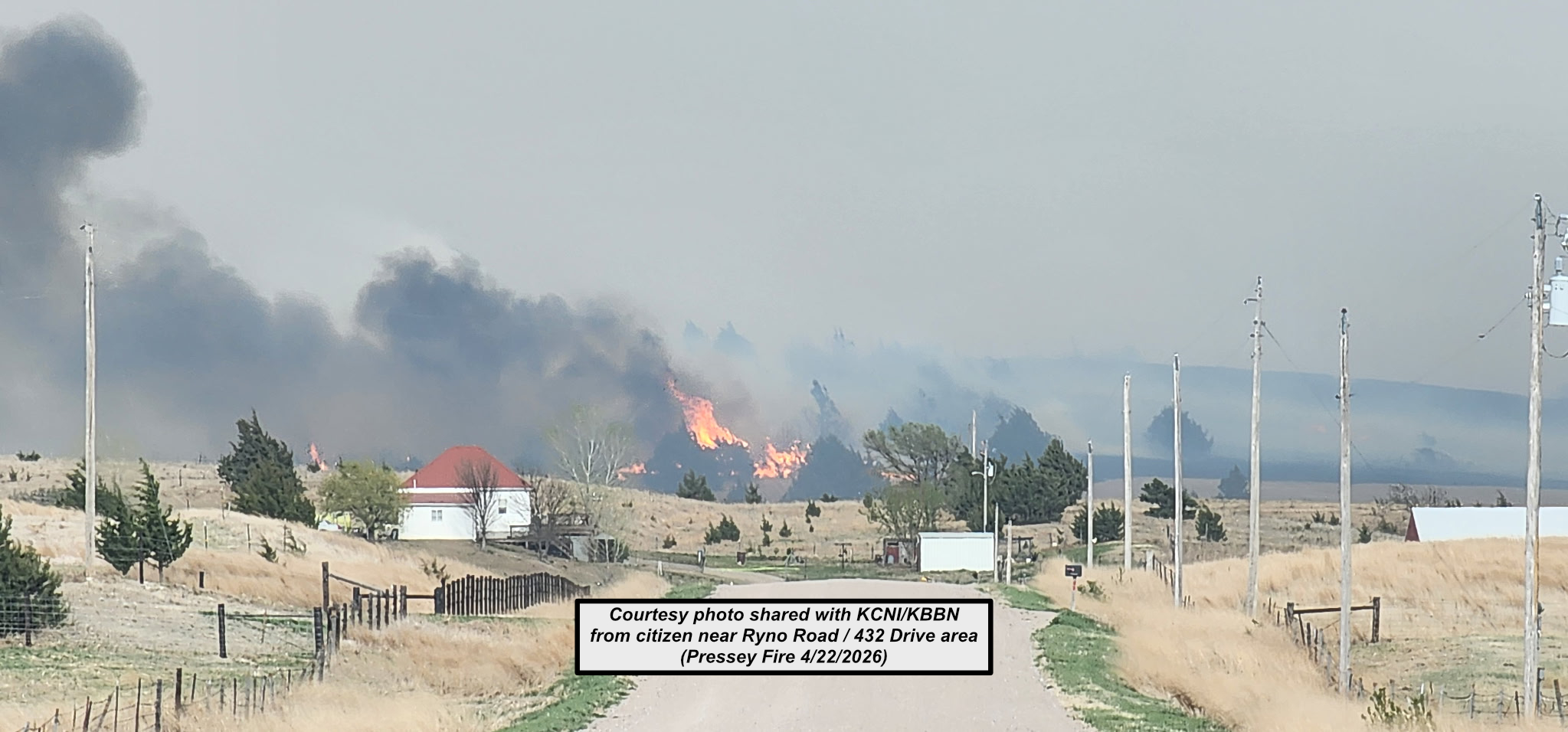
Nebraska Sandhills Fires

 C’mon Rain. There’s rain in the forecast! We are optimistically putting up rain gauges. 

These photos were taken one month after the fire. 


There’s a few key things to notice. 

You can faintly see a trail road in the 2nd photo. Joe said that was not visible before the fire and we’ve never driven there. He’s guessing it’s an old mail route that the blowing sand uncovered. 


The fence damage in this area is not as bad as we expected. The fire moved so fast that many of the posts are still decent. 

The wind has blown a lot -the sand is moving. We will probably be scooping tanks out when the time comes, and it will be a struggle to find the bottom fence wire in areas. 

You really grasp the size and scoop of the fire when all you see is miles and miles of sand. Right now it still looks like the Sahara desert, but the native grass is still there if we can just get moisture. It’s so fragile we have not driven back into the pastures to check our mills and solar panels yet,  we’re also certain we’d need to take a side by side or we’d get stuck. 

The other take away is how bad the roads are. Which is a mixed blessing. Our roads


have never seen this kind of semi traffic. The amount of truckloads of donated hay coming in (which has been absolutely incredible- and much needed) and the really sad part- is the amount of semis starting to haul cows/pairs out. 

It’s hard to see our gorgeous Sandhills look like this,  the Range experts tell us that the Sandhills will recover, we’ve also had really good calls with great advice from ranchers that have been through fires like this. 

This is our summer pastures, not our


headquarters. We didn’t lose  buildings or livestock. Our heart breaks for our neighbors that lost so much- and are waking up every morning looking out their kitchen window to see the “Sahara desert”-with nothing but sand blowing, instead of their lush green Nebraska Sandhills. Pray for nice slow rains. Pray for the ranch families who make their livelihood raising cattle in this remote pristine part of Nebraska. This is not easy to load your cows & calves on a semi -to sell them, or ship to another part of the country. 

Van Newkirk Herefords Oshkosh NE 308-778-6230


Wednesday, April 8, 2026

David Hackworth


He was the most decorated living soldier in America—until he went on national television and told the truth about Vietnam, ending his career in a single interview.

David Hackworth was 15 years old when he lied about his age and enlisted in the Army. It was 1946, just after World War II ended. Most boys his age were in high school. Hackworth was learning how to fight.

By 1950, when the Korean War broke out, he was already a seasoned soldier. He volunteered for combat immediately. While other teenagers were going to prom, Hackworth was leading men under fire in brutal mountain warfare.

He was fearless. Aggressive. Brilliant in combat.

By age 20, he became one of the youngest captains in Army history. His style was simple: lead from the front, move fast, hit hard, never give the enemy time to think. His men followed him because he never asked them to do anything he wouldn't do first.

He wasn't just brave—he was good at war.

When Vietnam started heating up in the 1960s, Hackworth was sent in early. By 1969, he took command of the 4th Battalion, 39th Infantry—a demoralized, underperforming unit that had been taking heavy casualties and accomplishing little.

Within months, Hackworth transformed them.

He threw out the conventional playbook. He created specialized reconnaissance teams. He trained his soldiers in unconventional tactics. He focused on small-unit operations, ambushes, and aggressive patrolling that kept the enemy off-balance. He studied the Viet Cong's methods and beat them at their own game.

The results were undeniable. His battalion inflicted massive casualties on enemy forces while keeping their own losses remarkably low. He didn't fight the Vietnam War the way the Pentagon wanted—he fought it the way that actually worked.

His chest filled with medals. Two Distinguished Service Crosses. Ten Silver Stars. Eight Bronze Stars. Eight Purple Hearts. More than 90 decorations total. He was one of the most decorated soldiers in American military history.

He was a living legend.

And then, in June 1971, Colonel David Hackworth did something almost unthinkable.

He went on ABC News—while still on active duty—and told America that the Vietnam War was unwinnable. That military leadership was lying about progress. That the strategy was fundamentally broken. That young men were dying for nothing.

"We're not winning," he said on national television. "We're not even fighting the right war."

The Pentagon exploded.

You don't go on TV and criticize your own military while you're still wearing the uniform. You don't publicly call out your superiors. You don't tell America that the war is a disaster while your commander-in-chief is insisting victory is around the corner.

But Hackworth did exactly that.

The backlash was immediate and brutal. He was investigated. He was pressured. His career—25 years of combat, leadership, and decorations—was over in an instant. He retired shortly after, essentially forced out, his reputation in Washington destroyed.

The Pentagon saw him as a traitor. The brass called him insubordinate, disloyal, a self-promoter seeking attention.

But the enlisted soldiers—the men who'd fought under him, the grunts in the jungle—they saw him differently.

They called him "Hack." They loved him. Because he'd told the truth they all knew but couldn't say: the war was broken, and good men were dying for bad strategy.

Hackworth didn't disappear after leaving the military. He became a journalist, writing for Newsweek and other publications. He wrote a brutally honest memoir, About Face, that became one of the bestselling military books ever published. He continued criticizing military leadership, Pentagon bureaucracy, and failed strategies.

He didn't soften his message. He didn't apologize.

And slowly, history proved him right.

Everything Hackworth said in 1971 about Vietnam—that the strategy was flawed, that we were lying about progress, that the war was unwinnable the way we were fighting it—turned out to be true. The Pentagon Papers confirmed it. The fall of Saigon confirmed it. Decades of analysis confirmed it.

The man they tried to silence had been right all along.

Hackworth spent the rest of his life advocating for soldiers. He pushed for better equipment, better leadership, better care for veterans. He wrote about the realities of combat that politicians didn't want to hear. He gave voice to the men who fought while leaders lied.

In 2005, David Hackworth died of bladder cancer at age 74. Doctors believed it was caused by Agent Orange exposure in Vietnam—the war had killed him slowly, decades after he left the jungle.

At his funeral, generals and privates stood side by side. Some still considered him a hero. Others never forgave him for breaking ranks. But no one could deny what he'd done: fought harder, led better, and told the truth when it cost him everything.

Here's what David Hackworth's story teaches us:

Sometimes the most courageous act isn't fighting the enemy in front of you. It's telling the truth to the people behind you, even when it destroys your career.

Hackworth could have stayed quiet. He could have retired with full honors, given speeches at military academies, enjoyed a comfortable post-military career. He had everything to lose and nothing to gain by speaking out.

He did it anyway.

Because he knew that young men were dying in a war that couldn't be won the way it was being fought. And he couldn't stay silent while the Pentagon kept lying about it.

That takes a different kind of courage than charging into battle. It takes moral courage—the willingness to sacrifice everything you've built for a principle you believe in.

David Hackworth fought in two wars and earned 90+ medals. But his most important battle wasn't in Korea or Vietnam.

It was the one he fought in 1971, standing in front of a TV camera, telling America the truth, knowing it would cost him everything.

He was the most decorated living soldier in America.

And he gave it all up to stop the lies.

That's not just a war hero. That's a different kind of hero entirely.


Follow us Lost in Yesterday

Tuesday, April 7, 2026

Cold, but we missed the snow in Clarinda, IA

 46 degrees here in Clarinda, IA at 10:00 pm Monday evening.  Had a real light skift of snow on the deck this morning, but heavier snow was to the north of us.

Very chilly day, 

A little "snow"
Was cool in our bedroom overnight here, but much warmer than the 61 degrees in the basement where we spent the weekend.  Worked indoors, still sorting and bringing in items from our return from Texas.

Later, LCM

Sunday, April 5, 2026

Easter Sunday in Eastern Iowa

 49º - "feel like" 45º here in Marengo, Iowa at 9:00 pm Sunday - low of 35º this morning.

Great Grandkids, David
and Jessica this morning.
 We arrived at son Cam's about 11 am yesterday, Saturday.  Granddaughter Ashley, with David & Jessica, came out from town in the afternoon and we had a good visit.
Jessica

Jessica and Cameron

David and Cameron


Last evening we went out to eat here in Marengo.


Went to Easter Sunday church service with
Cam's, Ashley & Heath's


Before lunch today

Before Lunch today


Before Lunch today

Lunch today


Lunch today


Will head west towards Clarinda in the morning.  LCM


Judy Faulkner

 While other billionaires race to space, this 82-year-old woman is quietly giving away $7 billion—and you've probably never heard her name.

Meet Judy Faulkner. No yacht. No private island. No monuments bearing her name.

Just a basement in Madison, Wisconsin, $70,000 borrowed from friends, and an idea that would save millions of lives.

The year was 1979. Healthcare was broken in ways most people never saw. Your medical records? Trapped in filing cabinets. Move to a new city? Your doctor knew nothing about your history. Critical allergies? Lost in the paperwork shuffle. People died in those gaps.

Judy saw the problem with unusual clarity. She'd worked in healthcare computing since the 1960s—back when "computing" meant punch cards and room-sized machines. She understood both medicine and code. And she knew that if medical information could follow patients seamlessly, everything would change.

So she built Epic Systems.

From that basement, with two part-time employees and a computer she programmed herself, she created what would become one of the most powerful healthcare technology companies in the world. Today, Epic holds medical records for patients across half the hospital beds in America. When your doctor pulls up your chart, checks your allergies, sees your test results from another hospital—there's a good chance Epic made that possible.

But here's where Judy's story diverges from every Silicon Valley playbook you've ever heard.

She never sold.

Never took venture capital. Never went public. Never chased the exit that founders are supposed to want. She kept Epic private because she believed patients should never be secondary to profit margins.

"Why be owned by people whose primary interest is return on equity?" she once asked.

It was a revolutionary stance. While other tech founders optimized for IPOs and acquisition deals, Judy optimized for something different: systems built to last decades, not quarters. Relationships with hospitals, not revenue spikes. Product quality over market dominance.

She grew Epic slowly, carefully, deliberately. At 82, she still goes to work every day at Epic's 1,670-acre campus in Verona, Wisconsin—a whimsical place with storybook-inspired buildings that one executive described as a mix between Bill Gates and Willy Wonka.

But the wealth came anyway. Billions of dollars. Inevitable, given Epic's success and scale.

And that's when the most important decision arrived.

Most billionaires, when they sign the Giving Pledge, commit to giving away their wealth someday. After death. Through foundations that will operate in their names long after they're gone. It's legacy planning dressed as philanthropy.

Judy went further.

In 2015, she pledged to give away 99 percent of her fortune. Not someday. Not after she's gone. Now. While she can see where it goes and ensure it's used well.

She named her foundation "Roots & Wings"—inspired by a conversation with her children years earlier, when they asked what they needed most from her.

Food, they said. Money. Security.

She shook her head. "You need roots and wings."

Roots: food, shelter, healthcare, education—the essentials that ground a life.

Wings: opportunity, dignity, the chance to rise.

In 2020, her foundation gave $15 million to over 100 organizations. By 2024, that number grew to $67 million distributed to more than 300 nonprofits. Her goal? $100 million annually by 2027.

She's systematically selling her Epic shares back to the company—ensuring employees benefit from ownership—and giving every dollar away. Into healthcare access for underserved communities. Education for children who need it. Housing stability for families on the edge.

Of the hundreds of billionaires who have signed the Giving Pledge, only a small fraction actually give away substantial wealth while they're alive. Most treat philanthropy as something that happens after they no longer need the money.

Judy Faulkner is giving it away now, while it can still matter in the world she inhabits.

In an era when wealth often becomes spectacle—vanity projects, ostentatious displays, monuments to ego—Judy chose stewardship.

Her legacy won't be measured in rockets or towers with her name on them.

It will be measured in lives saved because doctors had the information they needed. In children educated because someone believed learning matters more than profit. In families stabilized because help arrived before collapse.

She taught her children they needed roots and wings.

Now she's spending her fortune making sure millions of others can have both.

Not for tax benefits. Not for PR. Not for legacy polishing.

But because she genuinely believes that wealth, held without ego, can become something rare: a tool for care, a foundation for dignity, a quiet force that lifts others without demanding applause.

Judy Faulkner is 82 years old, worth billions, and still going to work every day at the company she built from a basement with borrowed money.

She could have sold decades ago. Could have retired to comfort. Could have multiplied her wealth through an IPO and justified keeping it a thousand different ways.

Instead, she's giving 99 percent away while she's alive to see it matter.

Most billionaires talk about giving back someday.

Judy Faulkner is actually doing it.

And hardly anyone knows her name.

Maybe it's time that changed. 


Margaret Hamilton

 July 20, 1969. Three minutes before landing on the moon.

Inside the lunar module Eagle, Neil Armstrong and Buzz Aldrin watched their computer screen flash urgent warnings.

“1202 alarm.”

Then: “1201 alarm.”

No one at Mission Control fully understood what these codes meant. The astronauts didn’t either. They had seconds to decide: abort the landing — or continue?

240,000 miles away, the software was already solving the problem.

Margaret Hamilton’s code recognized the computer was overloaded. It prioritized critical tasks. It discarded non-essential processes. It kept Eagle focused on landing safely.

Mission Control made the call: “We’re GO on that alarm.”

At 4:17 PM, Eagle touched down in the Sea of Tranquility.

The moon landing succeeded because of software written by a 33-year-old woman whose work had been dismissed as “quite amusing” just four years earlier.

Margaret Hamilton was born in 1936 in Paoli, Indiana — a world where computers didn’t even exist yet.

She loved mathematics. At Earlham College, she earned her degree in math with a philosophy minor in 1958. Her plan was simple: take a temporary job to support her husband James through Harvard Law School, then return to pursue her own graduate degree.

At 24, she took a programming job at MIT. It was meant to be temporary.

Instead, it changed space exploration.

In 1965, MIT partnered with NASA to develop guidance systems for Apollo — the mission to land humans on the moon. Margaret Hamilton was hired to lead the Software Engineering Division.

There was just one problem: software engineering didn’t exist.

No schools taught it. No textbooks explained it. No methods defined it. Hamilton was building the discipline from scratch.

“When I first got into it, nobody knew what we were doing,” she said. “It was like the Wild West.”

Worse, software wasn’t taken seriously. It was “treated like a stepchild,” she explained — seen as art and magic, not science.

Hamilton began calling her work “software engineering” to give it credibility — to place it alongside hardware engineering as an equal.

People laughed.

“When I first started using this phrase, it was considered quite amusing,” she said. “It was an ongoing joke.”

But Hamilton kept pushing. Her team was responsible for ALL flight software for Apollo’s Command and Lunar modules — computers weighing just 70 pounds that had to work perfectly the first time.

No margin for error. No second chance.

“The software had to be man-rated,” she said. “It had to detect errors and recover in real time.”

Hamilton was also a working mother. She often brought her young daughter Lauren to the lab on weekends.

One day, Lauren decided to “play astronaut.” She pressed buttons on the simulator.

The system crashed.

Hamilton immediately saw the risk: a real astronaut could make the same mistake during a mission.

She recommended adding protective code to prevent it.

NASA’s response: “Astronauts are trained not to make mistakes.”

Her request was denied.

Then came Apollo 8 — the first crewed mission to orbit the moon.

Astronaut Jim Lovell pressed the exact same command Lauren had triggered.

The navigation data was wiped out.

Hamilton and her team worked urgently, restoring the system within hours. The mission was saved.

Now she had approval to add protective safeguards for future flights.

But her most critical contribution came on July 20, 1969.

Apollo 11 was minutes from landing when the alarms began. Buzz Aldrin had requested altitude data — something routine in training. But it activated an unnecessary radar system.

The computer was running eight programs at once. It was designed for seven.

It was overloaded at the worst possible moment.

But Hamilton had already planned for this exact scenario.

Her software recognized the overload. It sent priority alarms. Then it did something revolutionary: it dropped lower-priority tasks, restarted essential ones, and focused only on what mattered — landing safely.

The system stayed alive.

Later, Hamilton said: “If the computer hadn’t taken recovery action, I doubt Apollo 11 would have been successful.”

There’s a famous photo from 1969: Margaret Hamilton standing beside a stack of Apollo code printouts.

The stack is taller than she is.

That’s how much code her team wrote — by hand, on paper. Punch cards. Rope memory woven by factory workers threading copper wires through magnetic cores.

The women who built it were called “LOL” — “little old ladies.”

Hamilton was called the “rope mother.”

This is how Apollo’s software was created.

After Apollo, Hamilton founded two software companies and published more than 130 papers. Her methods became the foundation of modern software engineering.

But for decades, her name remained largely unknown.

In 2003 — 34 years after Apollo 11 — NASA awarded her the Exceptional Space Act Award, including $37,200, the largest individual award they had given.

In 2016 — 47 years later — Barack Obama awarded her the Presidential Medal of Freedom.

“Our astronauts didn’t have much time,” he said, “but thankfully they had Margaret Hamilton.”

In 2017, LEGO released a Margaret Hamilton figure beside her famous code stack.

In 2019, Google created a massive portrait of her using 107,000 mirrors at a solar facility — visible in moonlight on the 50th anniversary of Apollo 11.

Margaret Hamilton is now in her late eighties.

The term she introduced — “software engineering” — is now one of the most respected professions in the world.

The discipline once mocked as “amusing” now powers everything from smartphones to spacecraft.

She built an entire field from nothing. She fought to have software taken seriously. She wrote code that had to work perfectly the first time. She warned that humans make mistakes — and proved it.

And she did it as a working mother in the 1960s, bringing her daughter to the lab on weekends.

Three minutes before landing, alarms screamed.

Her code saved the mission.

She called it “software engineering.”

They laughed.

It took 47 years for her medal.

Friday, April 3, 2026

Friday in Clarinda, IA


 Rain much of the night, then held off until mid afternoon after we left the funeral for Phyllis' first cousin Judy Heuer.  Many, many relatives there to visit with before the service and after returning from the cenetary to the church.


This afternoon I picked up some of the many twings and small branches that are on the lawn.  About 3:30 it started pouring rain again.


We leave about 7 in the morning for Marengo, IA to visit with Cam and his family over the weekend.

LCM

Thursday, April 2, 2026

At our Clarinda home

 56º and rain just quit.  Since we hadn't seen any rain all winter, driving in rain yesterday and this rain overnight kind of unusual!  

Will not have internet at home until Tuesday afternoon.   Phone as a Hotspot is terribly slow; after 25 minutes trying to upload a photo on the  computer I gave up.  This Now  is on phone. 

Got to Clarinda about 6 pm yesterday after getting supper in Maryville, MO after driving in rain most of the day. 


Well, I am finding it difficult to make this up on the phone,  at least with photos. 

Been busy getting things settled in Clarinda

 58º here in Clarinda, IA at 7:45 pm Sunday; was 35º this morning.   Have been busy, even while seemingly not getting a lot done! Friday mor...